

Outcomes 2025
Well Equipped Adult IOP 2025 Program Evaluation
Letter from Clinical Leadership
At Well Equipped, we recognize that real, sustained change in mental health often requires more than a weekly therapy session. Many of our clients come to us with difficulty managing stress, experiences of intense emotions, and feeling unfulfilled in their relationships. Well Equipped IOP offers structured, evidence-based support that helps clients live more effectively in the very environments where they struggle most. With expertise in DBT and extensive experience treating diverse and complex presentations, our team brings both clinical excellence and heartfelt presence to every contact.
At the heart of Well Equipped’s model is the belief that clients thrive when they have the skills & support to manage their internal experience and relationships with clarity and support. Clients learn to notice emotional patterns without judgement, to tolerate distress without resorting to ineffective coping strategies, to communicate needs assertively while maintaining connection, and to align their behavior with personal values, all within the context of a collaborative community.
We are grateful to the clients who have entrusted us with their care, to the clinicians whose skill and dedication make measurable outcomes possible, and to the partners who continue to see the value in evidence-based, intensive outpatient interventions.
Sarah Chipps, PsyD & Greta Gleissner, LCSW
Program Model
-
Intensive Outpatient Program (IOP)
-
DBT adherent, skills based treatment emphasizing emotion regulation, distress tolerance, interpersonal effectiveness, and mindfulness.
-
At Well Equipped, our clients participate in twelve hours of group therapy a week where they learn specific tactics to manage emotions, cope with stress, and improve relationships. Because Well Equipped is DBT adherent, our program incorporates the following key interventions:
Individual attention
During weekly one on one individual sessions with a DBT trained therapist, our clients focus on identifying and addressing specific challenges through a dialectical lens and with new skills.In the moment coaching
Well Equipped clients have access to a DBT therapist in between sessions via phone and text coaching, allowing them to access support and guidance when they’re struggling with a real life issue.
Consultation team
Our clinical team attends weekly consultation team meetings to receive ongoing support and guidance from a DBT certified trainer.Group skills training
Clients participate in twelve hours of group therapy a week. Our program is uniquely focused on equipping clients with evidence based skills and support to manage emotions, cope with stress, improve relationships, and practice mindfulness.
Demographics
The 2025 Well Equipped cohort reflects a socially and clinically heterogeneous population, with clients representing a range of racial and ethnic backgrounds, gender identities, sexual orientations, and relationship statuses. Observed improvements in mood, coping capacity, and suicide risk severity occurred within a diverse and high acuity population, underscoring the applicability of DBT adherent outpatient care across varied lived experiences.
Demographic information presented below reflects aggregated, deidentified data from clients who were in our care for at least 4 weeks (28 days) and who submitted data within 2 weeks of admit and discharge.
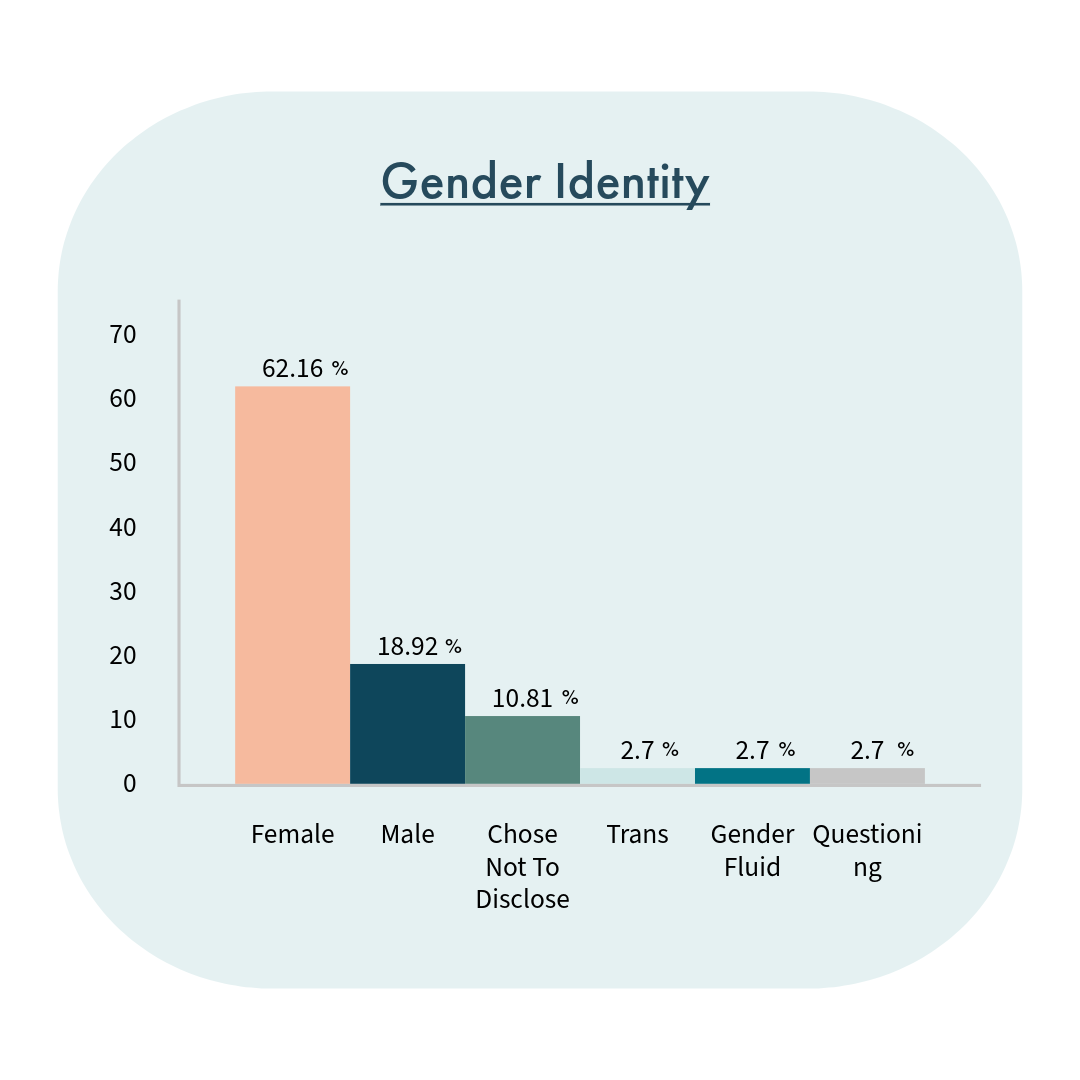
Gender Identity
Clients represented a range of gender identities, including women, men, and gender diverse individuals.
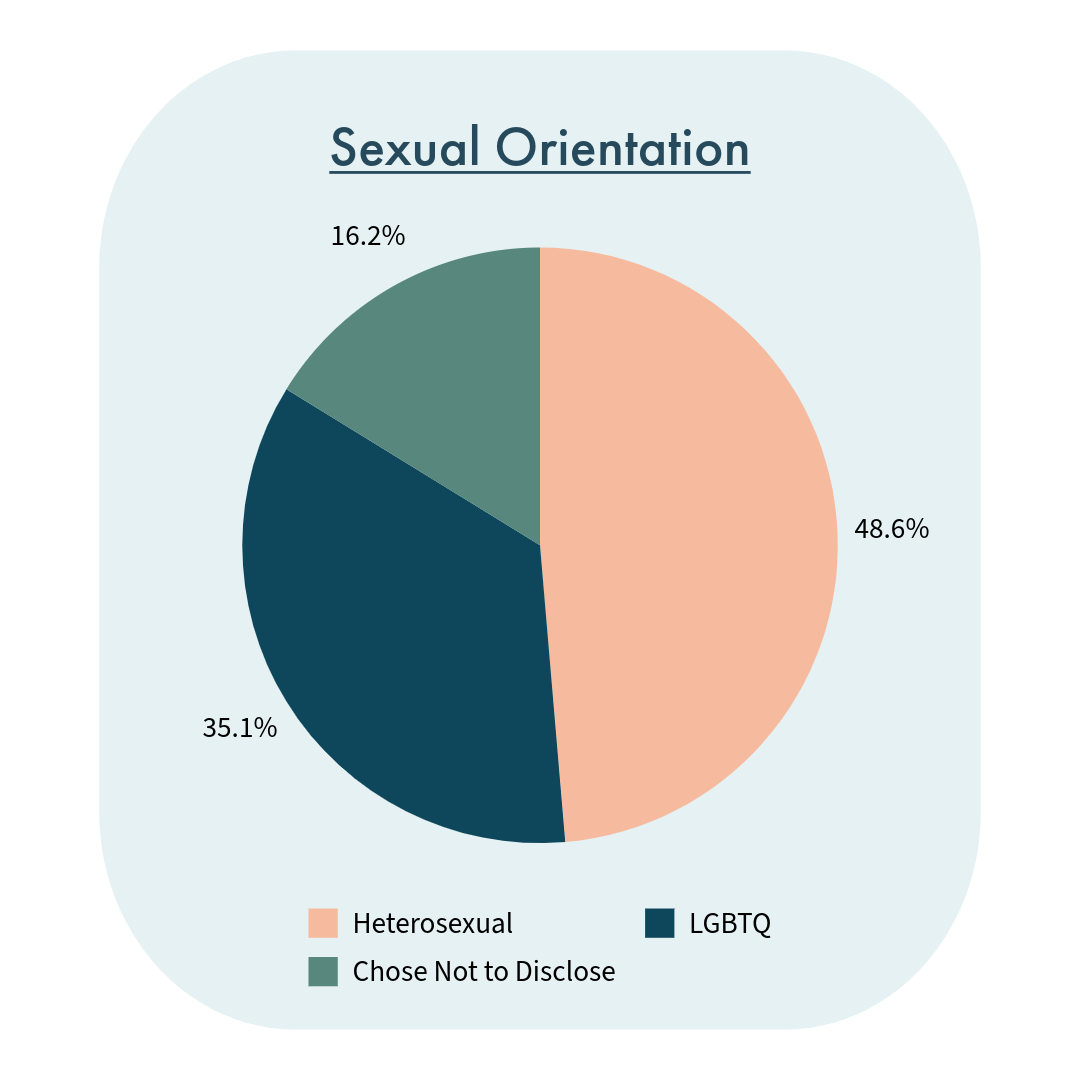
Sexual Orientation
Approximately one third of clients identified as LGBTQIA+.
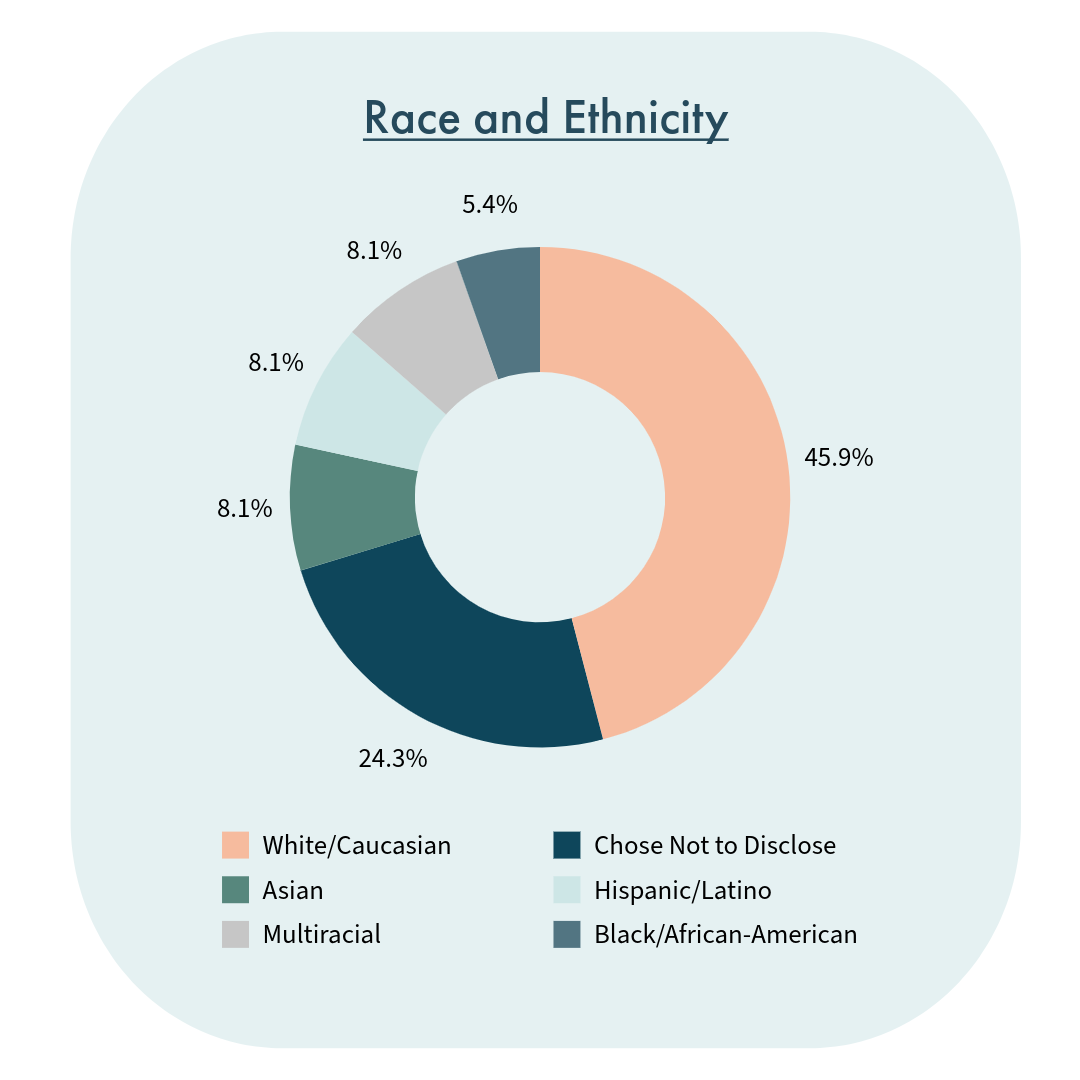
Race / Ethnicity
Clients came from a variety of racial and ethnic backgrounds.
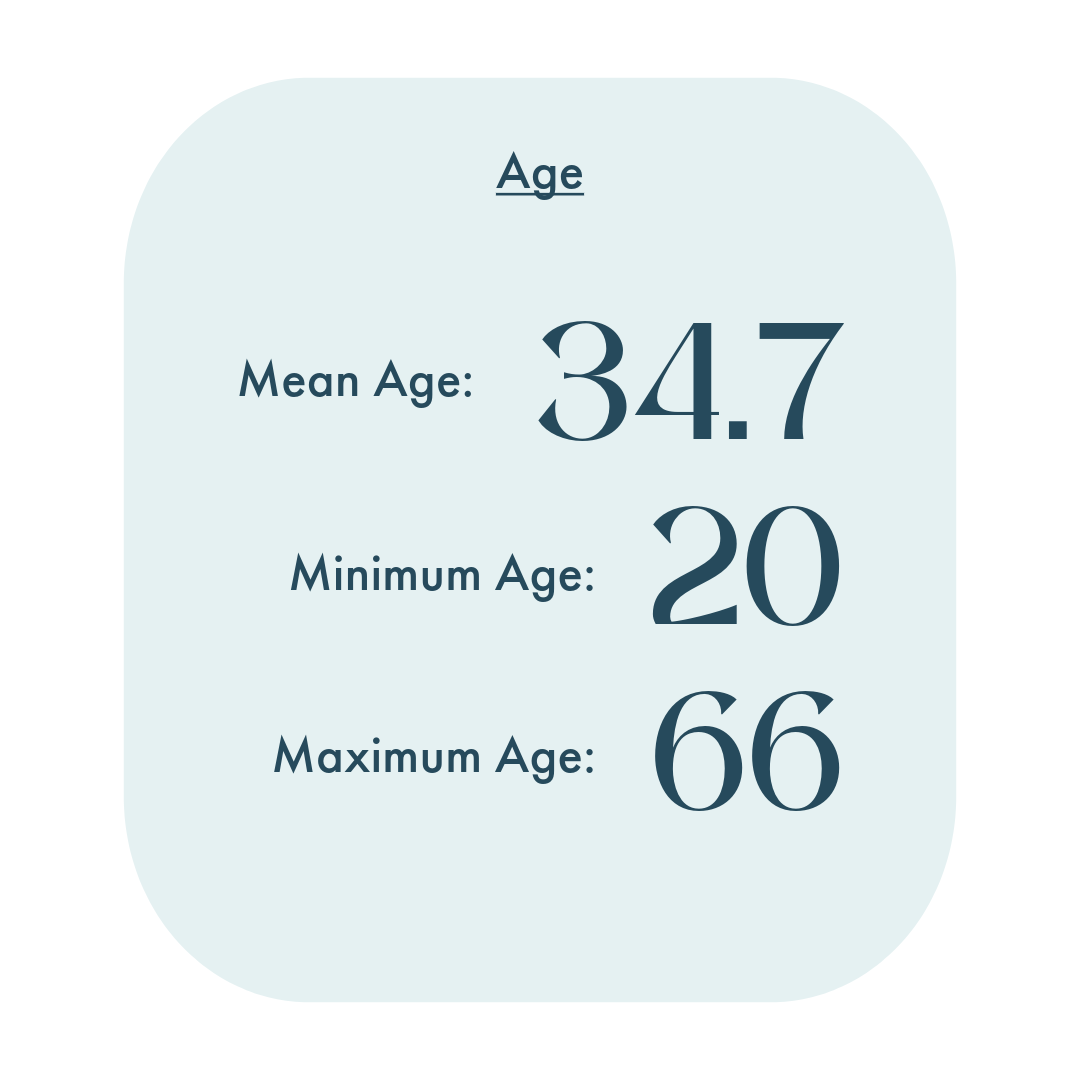
Age
Clients ranged in age from 20 to 66 years, with a mean age of 35, reflecting an adult population spanning early adulthood through later midlife.
“I appreciated how supportive and non-judgmental everyone was.”
“I felt treated with dignity and respect throughout the program.”
“The group facilitators were all amazing, everyone was patient and understanding and encouraging of participation.”
Client reports from Satisfaction Surveys
Outcome Overview
Most clients demonstrated meaningful improvement across emotion regulation, safety, and depressive symptoms. Over half showed improved emotion regulation capacity and three quarters experienced reductions in suicide risk severity, with most transitioning into low risk or no ideation categories by discharge or last observed assessment.
Clients entered treatment with substantial clinical need: approximately 74% met criteria for clinically significant depression, 72% had elevated or severe emotion regulation difficulties, and 67% presented with moderate to high suicide risk indicators. By discharge, 53% no longer met the clinical cutoff for depression, 56% had shifted into moderate or lower emotion regulation difficulty ranges, and 75% were in low risk or no ideation suicide risk categories.
Across measures, 58% of clients showed reductions in depressive symptoms (PHQ 9), 67% demonstrated improved emotion regulation capacity (DERS 18), and 75% experienced reductions in suicide risk severity (C SSRS). Clinically meaningful improvement was observed in over one third of clients for depression and approximately half for emotion regulation. Importantly, clients without suicidal ideation at intake did not develop new risk during treatment.
Together, these findings indicate that the majority of clients experienced improvement across key symptoms, capacity, and safety domains during DBT adherent intensive outpatient care, highlighting not only symptom relief, but the skills and safety gains that support longer term recovery.
“I’m able to manage my symptoms in ways that I never knew or even believed I could. I was supported and encouraged. I’m grateful.”
“Everyone was very caring and I appreciated all the help.”
Client reports from Satisfaction Surveys
Outcomes Measurement Approach
We use measurement based care as part of routine clinical practice. Measures are completed at intake and at discharge.
Measures included in this 2025 evaluation include:
Client Satisfaction Surveys
Patient Health Questionnaire (PHQ-9)
Difficulties in Emotion Regulation Scale 18 (DERS-18)
Columbia-Suicide Severity Rating Scale (C-SSRS)
Together, these capture:
Client experience & engagement
Depression symptoms (PHQ-9)
Emotion regulation capability (DERS-18)
Safety & risk (C-SSRS)
Assessment data presented below (including PHQ-9, DERS-18, and C-SSRS scores) reflects aggregated, deidentified data from clients who completed at least 28 days of IOP and who submitted data within 2 weeks of admit and discharge. All client satisfaction and client reflection data available were included.
Key Outcomes
Client satisfaction with the Well Equipped was very high.
100% would recommend Well Equipped
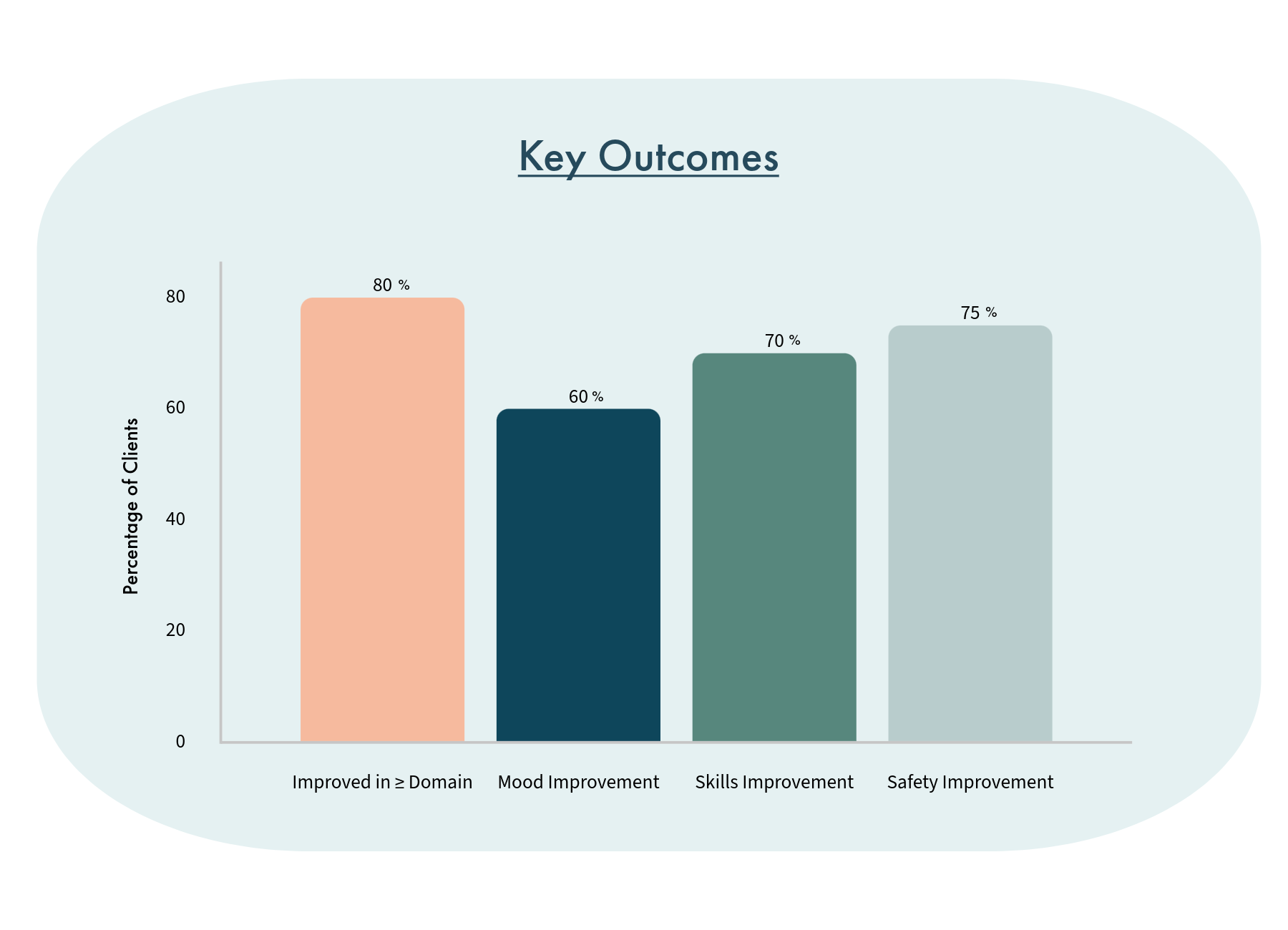
80% improved in at least one domain
60% mood improvement
70% skills improvement
75% safety improvement
Among survey respondents, 100% indicated they would recommend the program to others. 80% of our clients demonstrated improvement in at least one clinically meaningful domain, including depressive symptoms, emotion regulation capacity, or suicide risk severity. This pattern reflects the heterogeneity of recovery trajectories in high acuity outpatient care and supports the effectiveness of DBT IOP in producing clinically meaningful change across multiple treatment targets.
Typical Length of Care
Clients in the Well Equipped DBT Intensive Outpatient Program engaged in treatment an average of 65 days, reflecting the program’s 8 week curriculum designed to build core DBT skills and support transition to ongoing outpatient care. Furthermore, Well Equipped’s average treatment length aligns with the lower end of the 8–12 week (56-84 days) duration commonly observed in intensive outpatient programs nationwide.
Real World Outpatient Population
Outcomes reflect routine clinical care delivered to a high acuity outpatient population with complex clinical presentations, co-occurring conditions, and varying levels of engagement over time. As such, observed outcomes represent real world treatment effectiveness rather than results from a controlled research sample.
Individual Experiences Vary
While aggregated data demonstrate meaningful improvement across symptom, skill, and safety domains for many clients, individual treatment trajectories vary. Changes may occur at different rates across domains, and not all clients experience improvement within the same timeframe.

Client Satisfaction Surveys
Client satisfaction with the Well Equipped DBT Intensive Outpatient Program was consistently high. Among 2025 survey respondents, 100% rated overall satisfaction, staff support, and group facilitation positively and indicated they would recommend the program to others. 100% of clients reported feeling better at discharge than they did when they started the program and 100% reported leaving the program more skillful and effective.
Client experience and satisfaction data were collected in 2025 as part of routine quality improvement efforts for the Well Equipped. Responses reflect aggregated, deidentified client reported feedback using a 5 point Likert scale (1 = Definitely Not, 5 = Absolutely!).
“Great experience.”
“I loved every group session! All the facilitators were so sweet and other clients were also very kind and understanding. The group was an amazing experience :)”
“There are real bonds between the group members.”
“My case manager was able to provide useful skills to try with each challenge I faced.”
Client reports from Satisfaction Surveys
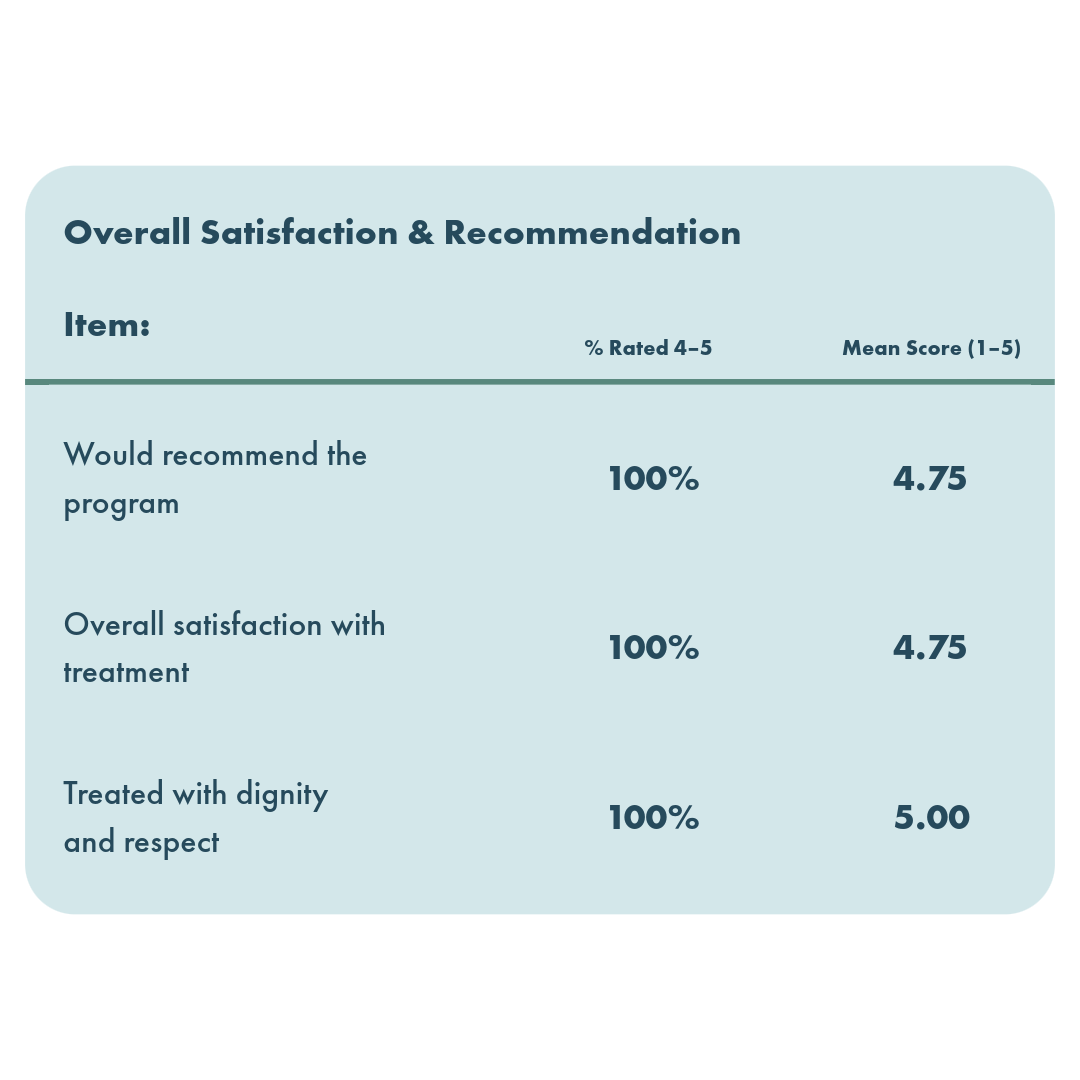
Overall Satisfaction & Recommendation
All respondents reported high overall satisfaction and indicated they would recommend the program to others.
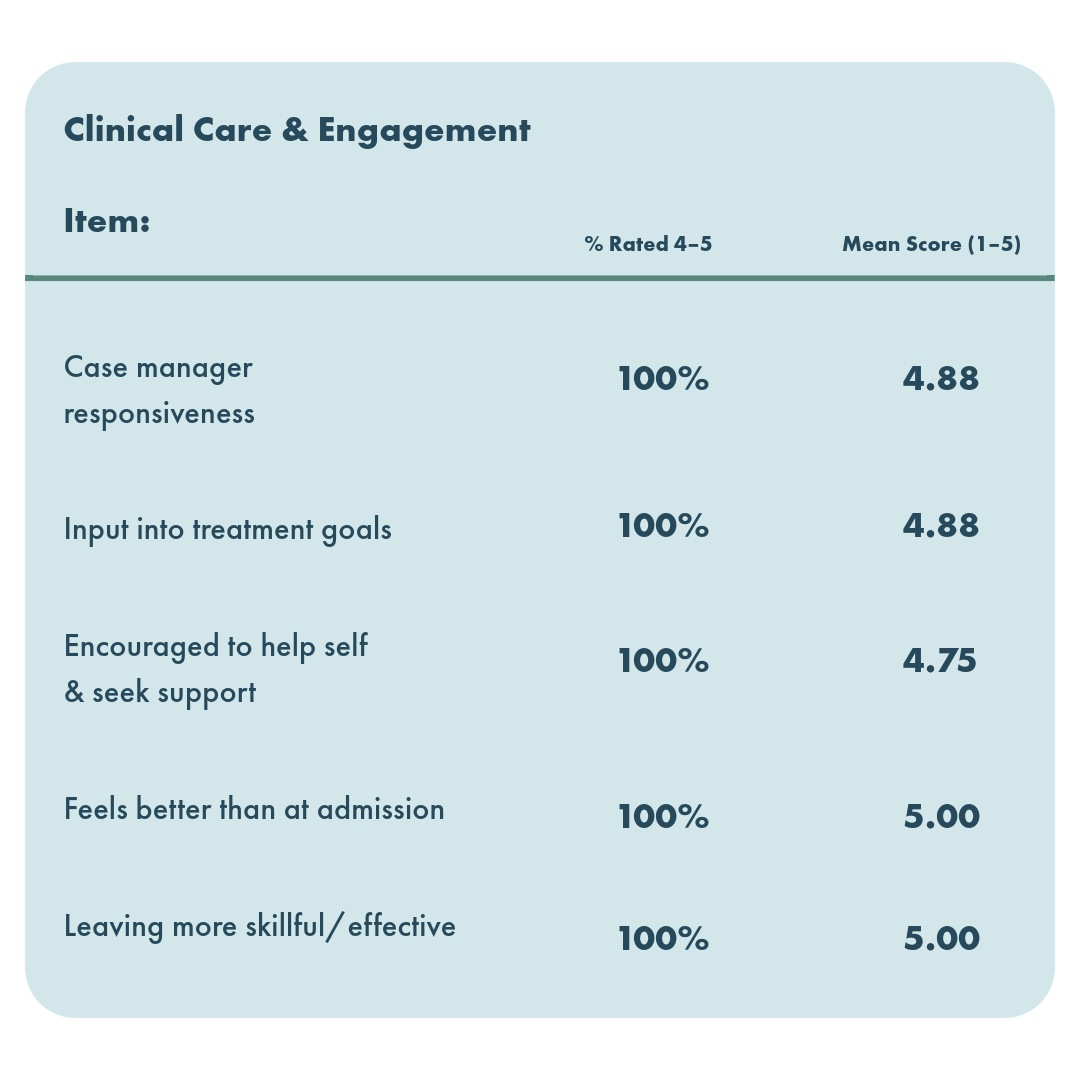
Clinical Care & Engagement
Clients consistently endorsed feeling supported, involved in their care, and more capable of managing their mental health at discharge.
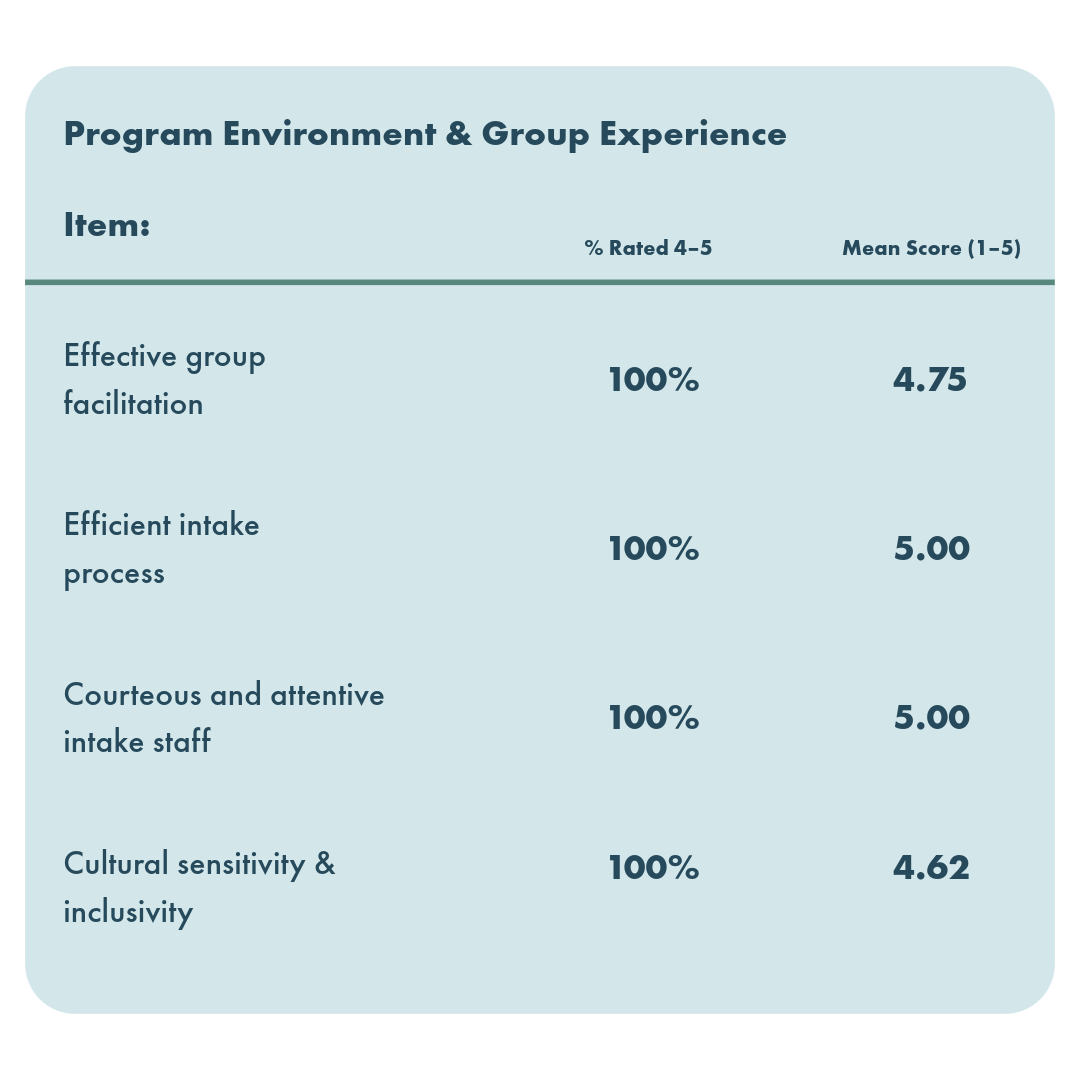
Program Environment & Group Experience
Clients reported strong satisfaction with program structure, staff professionalism, and the overall group environment.
Depressive symptoms improved (PHQ-9)
In 2025, paired PHQ-9 (n=19) analyses showed:
Mean improvement: 3.42 points (intake → discharge/last observed)
Statistical significance: p = 0.0075
Effect size: d = 0.69 (medium to large)
Clients demonstrated statistically significant and clinically meaningful reductions in depressive symptoms over the course of treatment. The medium to large effect size indicates a robust treatment effect within a real world outpatient population. These findings support the effectiveness of skills based, DBT informed care in reducing depressive symptoms during intensive outpatient treatment.
“I’m able to manage my symptoms in ways that I never knew—or even believed—I could.”
“I was able to participate and feel joy.”
“I felt calmer after group.”
“Did all the skills today and felt proud and accomplished.”
Client reports from Satisfaction Surveys
Emotion regulation capacity improved
(DERS-18)
Paired DERS-18 (n=17) analyses showed:
Mean improvement: –8.24 points (lower = fewer regulation difficulties)
Statistical significance: p = 0.0113
Effect size: d ≈ 0.69 (medium–large magnitude)
Clients showed measurable gains in emotion regulation.
"Used phone coaching to get out of bed. Very helpful.”
“Mindfulness really helped ground me and not wander into what ifs.”
“Emotions were strong today but I think they were shorter in duration.”
“Practicing skills made a real difference for me.”
Client reports from Satisfaction Surveys
Suicide risk indicators decreased substantially
(C-SSRS)
Paired C-SSRS severity of ideation results (n=12) showed:
Mean improvement: –2.42 points (negative = improvement)
Statistical significance: p = 0.0065
Effect size: d ≈ 0.97 (large)
Across clients with paired C-SSRS scores, suicidal ideation severity decreased meaningfully, with a large effect size, supporting the program’s role in enhancing outpatient safety.
“I was desperate to break the cycle of depression, SI and seeking external validation. Having the opportunity to learn skills to manage these challenges made a significant contribution to my quality of life and my interactions with others.”
“Self harm thoughts, but so much quieter.”
“Had fleeting self harm thoughts…and they passed.”
“Told myself the feeling will pass, and it has.”
Client reports from Satisfaction Surveys
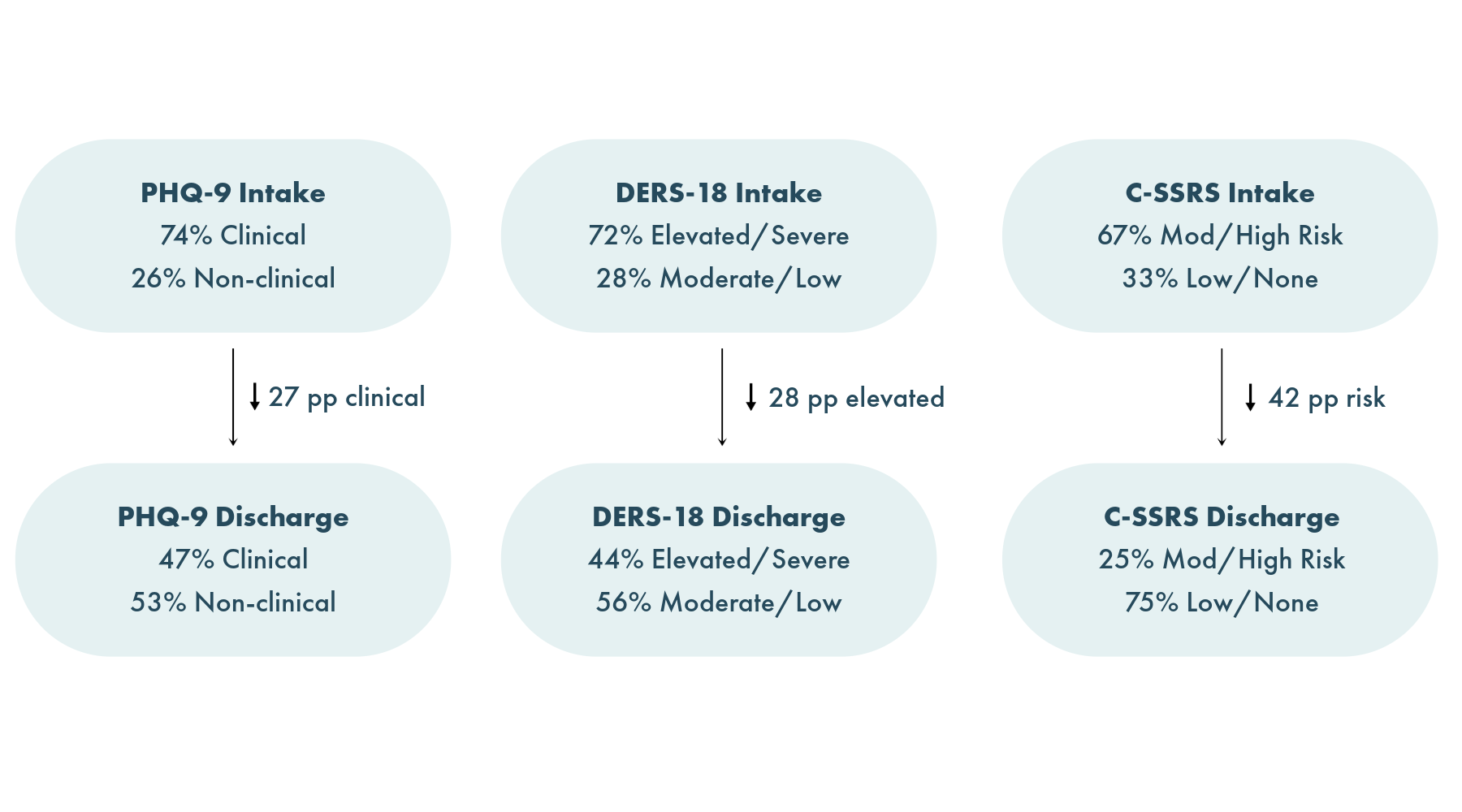
This flow diagram illustrates changes in clinical severity bands from intake to discharge across three outcome domains. Across depression severity (PHQ 9), emotion regulation difficulties (DERS 18), and suicide risk (C SSRS), a substantial proportion of clients shifted from higher severity categories into lower severity or lower risk ranges. Absolute reductions ranged from 27 to 42 percentage points, reflecting clinically meaningful movement.
Looking Ahead
We remain committed to transparency, clinical excellence, and continuous quality improvement.
Above all, these findings reaffirm what guides our work every day: care that prioritizes safety, dignity, skill-building, and sustainable healing can make a meaningful difference.
We are deeply grateful to the clients who trusted Well Equipped with their care, and to the clinicians who walk alongside them in the work of recovery.
— Well Equipped Clinical Leadership
Reserve your spot
Contact us to learn more about Well Equipped